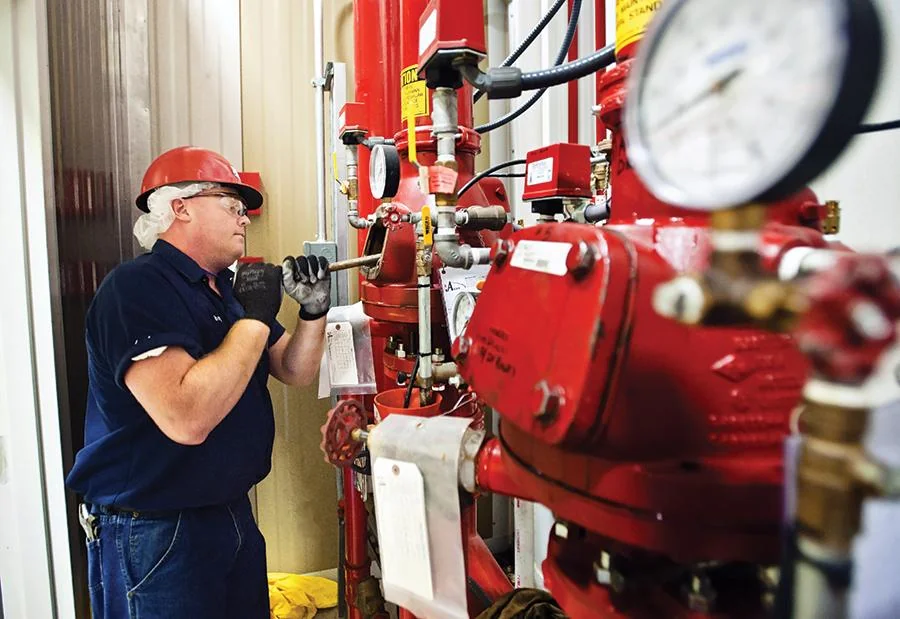
Automatic fire sprinkler systems are among the most effective fire protection technologies ever developed. When properly maintained, sprinkler systems control or extinguish fires in their early stages, dramatically reducing property damage and saving countless lives. However, sprinkler systems require regular inspection, testing, and maintenance to ensure they will operate as designed when needed. NFPA 25, the Standard for the Inspection, Testing, and Maintenance of Water-Based Fire Protection Systems, provides comprehensive requirements for maintaining sprinkler system reliability throughout their service life.
Understanding NFPA 25
NFPA 25 is published by the National Fire Protection Association and updated on a three-year cycle to reflect evolving technology and industry best practices. The standard applies to all water-based fire protection systems including automatic sprinklers, standpipes, fire pumps, and private fire service mains. While NFPA 13 governs sprinkler system design and installation, NFPA 25 addresses the ongoing inspection, testing, and maintenance required to keep systems operational.
The standard establishes minimum requirements that apply regardless of system age. Even systems installed decades ago must comply with current NFPA 25 inspection and testing requirements, though they are grandfathered regarding design standards that were in effect when installed. This ensures that all sprinkler systems receive appropriate maintenance regardless of when they were built.
Inspection Frequencies and Requirements
Weekly and Monthly Inspections
Weekly inspections are required for certain critical components including fire pump systems and private fire service mains. These frequent checks verify that equipment is in service and ready to operate. Control valves must be verified to be in the correct position, typically locked or supervised in the open position. Pressure gauges are checked to ensure they show normal readings.
Monthly inspections extend to additional system components. Building owners or their representatives must verify that control valves remain accessible and properly positioned. Gauges should be checked for normal pressure readings. Any physical changes to the building that might affect sprinkler system performance should be noted. These frequent inspections provide early warning of problems and ensure systems remain in service.
Quarterly Inspections
Quarterly inspections focus on components that require more detailed examination. Alarm devices including water flow alarms and pressure switches are tested to verify proper operation. Gauges are checked for accuracy and replaced if readings are questionable. Hydraulic nameplates are verified to be in place and legible. Fire department connections are inspected to ensure they remain accessible and free of obstructions.
Dry pipe and preaction systems require quarterly inspection of air pressure and trip test devices. Low air pressure can indicate leaks that must be corrected to ensure proper system operation. Antifreeze solutions in dry pipe systems must be tested for proper concentration to prevent freezing in cold weather.
Annual Inspections
Annual inspections represent the most comprehensive evaluation of sprinkler system condition and performance. All system components are examined including sprinkler heads, piping, hangers, valves, and alarm devices. Sprinkler heads are inspected for damage, corrosion, loading, and proper orientation. Any heads showing signs of deterioration must be replaced.
Piping and hangers are inspected for proper support, signs of corrosion or damage, and adequate clearance from building structural elements. Control valves are operated through their full range to verify proper function and prevent seizing. Valve stems are lubricated as needed to ensure smooth operation. Gauges are tested for accuracy and replaced if found to be inaccurate.
Testing Requirements
Water Flow Testing
Annual water flow testing verifies that adequate water supply is available to support sprinkler system operation. Testing measures static pressure, residual pressure, and flow rate at a test connection. Results are compared to original design specifications to ensure the water supply remains adequate. Significant degradation in water supply may require system modifications or coordination with water utility providers.
Flow testing also verifies proper operation of water flow alarm devices. When water flows through the system at rates equivalent to one or more sprinklers operating, alarm devices should activate and transmit signals to monitoring stations. Testing confirms that building occupants and emergency responders will be notified promptly when the system activates.
Valve Testing
Control valves must be tested annually to verify they operate smoothly and seal properly. Valves are closed and reopened while monitoring system pressure to confirm proper operation. Tamper switches that supervise valve position are tested to verify they transmit trouble signals when valves are moved from their normal position. This supervision prevents valves from being accidentally closed, which would render portions of the sprinkler system inoperative.
Check valves require testing every five years to verify they prevent reverse flow and close properly. Testing involves opening test connections and verifying that water flows in only one direction. Leaking check valves must be repaired or replaced to maintain system integrity.
Dry Pipe and Preaction System Testing
Dry pipe and preaction systems require specialized testing to verify proper operation. Trip tests are conducted annually to measure the time required for water to reach the system test connection after the system is activated. Excessive trip times may indicate problems with air pressure, valve operation, or system design that must be corrected.
Preaction systems require testing of detection devices and release mechanisms. All components must operate properly to ensure water is released when fire is detected. Full-scale testing verifies that detection, release, and water delivery occur within acceptable timeframes.
Internal Pipe Inspection
NFPA 25 requires internal inspection of sprinkler system piping at five-year intervals for dry pipe systems and ten-year intervals for wet pipe systems. These inspections identify corrosion, scale, biological growth, and other conditions that can obstruct pipes and prevent proper sprinkler operation. Inspection typically involves removing sprinkler heads and examining pipe interiors using cameras or by cutting sample sections.
If internal inspection reveals significant obstruction or corrosion, the system must be cleaned or replaced. Flushing may be adequate for light accumulations, while severe corrosion may require complete pipe replacement. Systems with galvanized steel pipe are particularly susceptible to internal corrosion and may require more frequent inspection.
Sprinkler Head Replacement
Sprinkler heads have finite service lives and must be replaced periodically even if they appear undamaged. NFPA 25 requires that fast-response sprinkler heads manufactured before 2001 be tested or replaced after twenty years of service. Standard response heads manufactured before 1920 must be replaced after fifty years. Heads manufactured after these dates must be tested at fifty years and every ten years thereafter, or replaced.
Sprinkler heads exposed to corrosive environments, high temperatures, or mechanical damage should be replaced immediately regardless of age. Painted, corroded, or loaded sprinkler heads must also be replaced as these conditions can prevent proper operation. Replacement heads must match the specifications of original heads including temperature rating, response time, and spray pattern.
Impairment Procedures
When sprinkler systems must be taken out of service for maintenance, testing, or repairs, NFPA 25 requires specific impairment procedures. The authority having jurisdiction and insurance carrier must be notified before systems are impaired. Building occupants should be informed of the impairment and any special precautions required during the outage.
Alternative protection measures may be required during extended impairments. These can include fire watches, temporary evacuation of hazardous operations, or installation of temporary protection systems. Impairments should be scheduled during periods of minimal building occupancy and completed as quickly as possible. When systems are returned to service, they must be tested to verify proper operation before the impairment is considered ended.
Documentation Requirements
NFPA 25 mandates comprehensive documentation of all inspection, testing, and maintenance activities. Building owners must maintain records including system installation documentation, hydraulic calculations, inspection reports, testing results, and maintenance records. These documents must be kept on-site or in an approved alternative location where they are readily accessible to authorities having jurisdiction.
Inspection and testing reports must document all deficiencies identified and corrective actions taken. Reports should be signed by qualified personnel certifying that work was performed in accordance with NFPA 25 requirements. Maintaining accurate records demonstrates compliance with code requirements and provides valuable information for troubleshooting and system modifications.
Qualified Personnel
NFPA 25 requires that inspection, testing, and maintenance be performed by personnel with appropriate training and experience. Property owners may perform some routine inspections such as monthly visual checks, but technical testing and maintenance must be performed by qualified contractors. Many jurisdictions require contractors to hold specific licenses for sprinkler system work.
Qualified personnel should be factory-trained on specific equipment installed in your facility and stay current with code changes through continuing education. They should carry appropriate insurance coverage and be able to provide references from similar facilities. Establishing relationships with qualified contractors ensures timely service and consistent quality.
Common Compliance Challenges
Maintaining NFPA 25 compliance can be challenging for building owners. Tracking multiple inspection and testing frequencies for different system components requires careful scheduling. Coordinating testing with building operations to minimize disruption takes planning. Budgeting for inspection, testing, and repairs requires understanding of system conditions and potential problems.
Many building owners find that service contracts with qualified sprinkler contractors simplify compliance. These contracts typically include all required inspections and testing for a fixed annual fee, providing budget predictability and ensuring work is completed on schedule. Contractors maintain testing schedules, provide documentation, and coordinate with building operations to minimize disruption.
Consequences of Non-Compliance
Failure to maintain sprinkler systems in accordance with NFPA 25 can have serious consequences. Fire officials may issue citations and require immediate correction of deficiencies. Insurance carriers may deny claims if systems were not properly maintained. Building owners face significant liability exposure if fire-related injuries or deaths occur and sprinkler systems were not maintained properly.
Beyond legal and financial consequences, non-compliance puts lives and property at risk. Sprinkler systems that are not properly maintained have higher failure rates during fires. Studies have shown that properly maintained sprinkler systems are effective in controlling or extinguishing fires in over ninety-five percent of cases, while neglected systems have significantly lower effectiveness rates.
Conclusion
NFPA 25 provides a comprehensive framework for maintaining fire sprinkler system reliability throughout their service life. By following these requirements, building owners ensure their sprinkler systems will protect lives and property when needed most. While compliance requires ongoing investment in inspection, testing, and maintenance, the cost is minimal compared to the value of the protection provided. Working with qualified professionals who understand NFPA 25 requirements provides confidence that your sprinkler system is ready to perform its life-saving function.